
Table Of Contents
In recent years, companies engaged in the design and manufacturing of dc-dc converters have been under tremendous competitive pressure as market demand continues to evolve toward products with smaller size, higher power density and higher efficiency. Regardless of cost, volume or performance, the transformer is a key component in the design of dc/dc converters and plays a decisive role in the overall performance of dc-dc converters. Although traditional wirewound transformers are still used in many larger form factor power supplies, the emergence of several new transformer technologies in recent years has brought significant benefits to dc/dc converter design, such as planar transformers.
Standalone and Embedded Planar Transformers
Standalone planar transformers are constructed using planar copper lead frames or etched/printed copper wire for windings, which takes up much less space than traditional transformers with copper wire wound on a bracket. Compared with wire-wound transformers, the precision copper lead frames or printed windings can meet design specifications more accurately, and the repeatability level between devices is also improved. The etched/printed copper lead frames or printed windings are stacked in a plane and form the magnetic circuit of the transformer with the high-frequency ferrite core, which is a low-profile transformer component design. In a planar design, a larger copper conductor cross-sectional area can be obtained, making it easier to achieve high power density and high current design. The high surface-to-capacity ratio of the planar windings and ferrites provides good heat dissipation for the product.
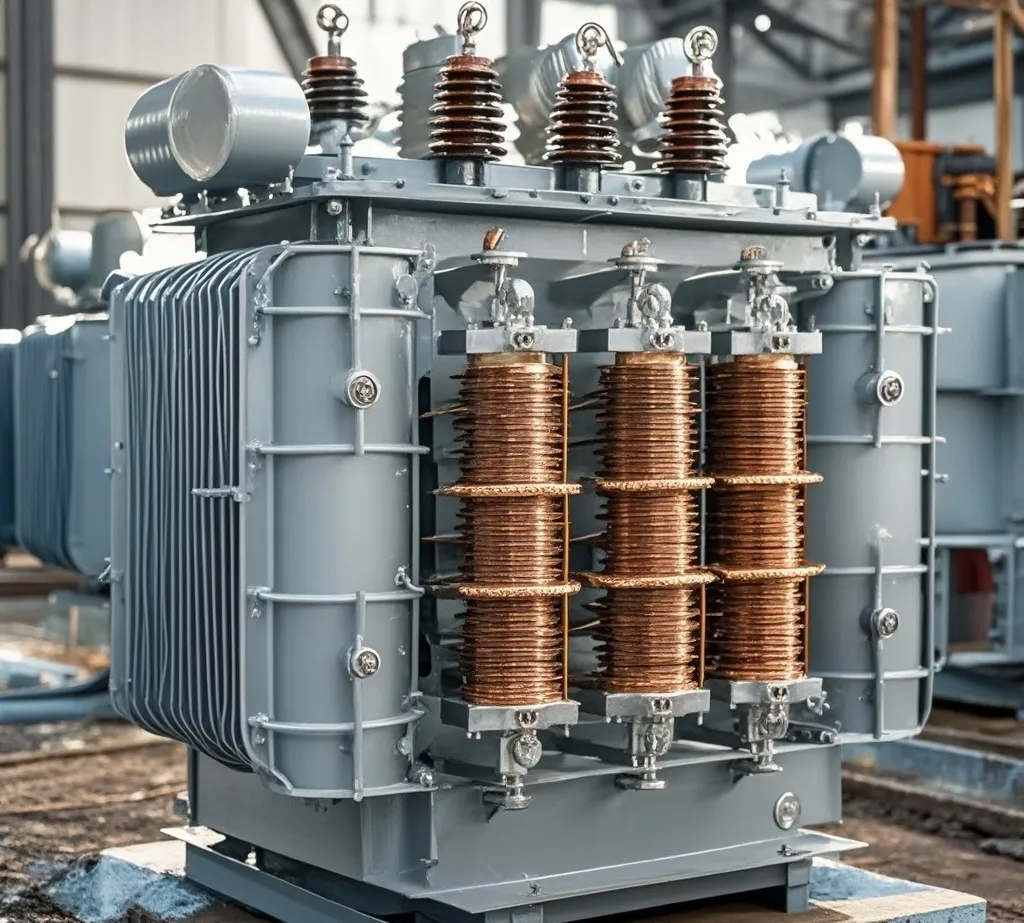
When working at high frequencies, wire-wound transformers are affected by the “skin effect”. When high-frequency current passes through a cylindrical conductor, it forces electrons to flow from the middle to the edge and concentrate on the surface of the copper wire, thereby reducing the current flowing through the conductor cross-sectional area. However, when working at high frequencies, planar transformers do not have such a situation, which greatly improves the efficiency of the transformer. From the perspective of manufacturing and assembly, planar transformers are also superior to wire-wound transformers. Wire-wound transformers usually require manual operation to strip the paint from the winding ends, and then dip tin or hand solder.
The pressed or etched copper lead-out ends of planar transformers can usually form surface mount terminals, which increases assembly speed and reduces costs. This advantage will be more prominent when combined with embedded planar transformers: the ferrite passes through the DC-DC converter PCB, and the windings are spirally wound layer by layer on the printed circuit board. Although stand-alone planar transformers take up more space than embedded designs, stand-alone planar transformers have become increasingly popular with designers in recent years. Fully embedded transformers use the circuit board of the DC-DC converter as the winding, and each set of input/output voltages requires a different circuit board design. Moreover, for embedded planar designs, etching coils requires the use of multi-layer circuit boards, which has a high overall cost. Some hybrid designs generally use the main PCB as the primary winding, and then use separate small PCB as the secondary to generate different output voltages.
Although embedded designs have advantages such as high power density, good thermal performance, and small footprint, they have not been widely used due to their limitations in cost, design flexibility, and interchangeability. If the production batch is large, the high cost of embedded designs can be reduced to a certain extent.
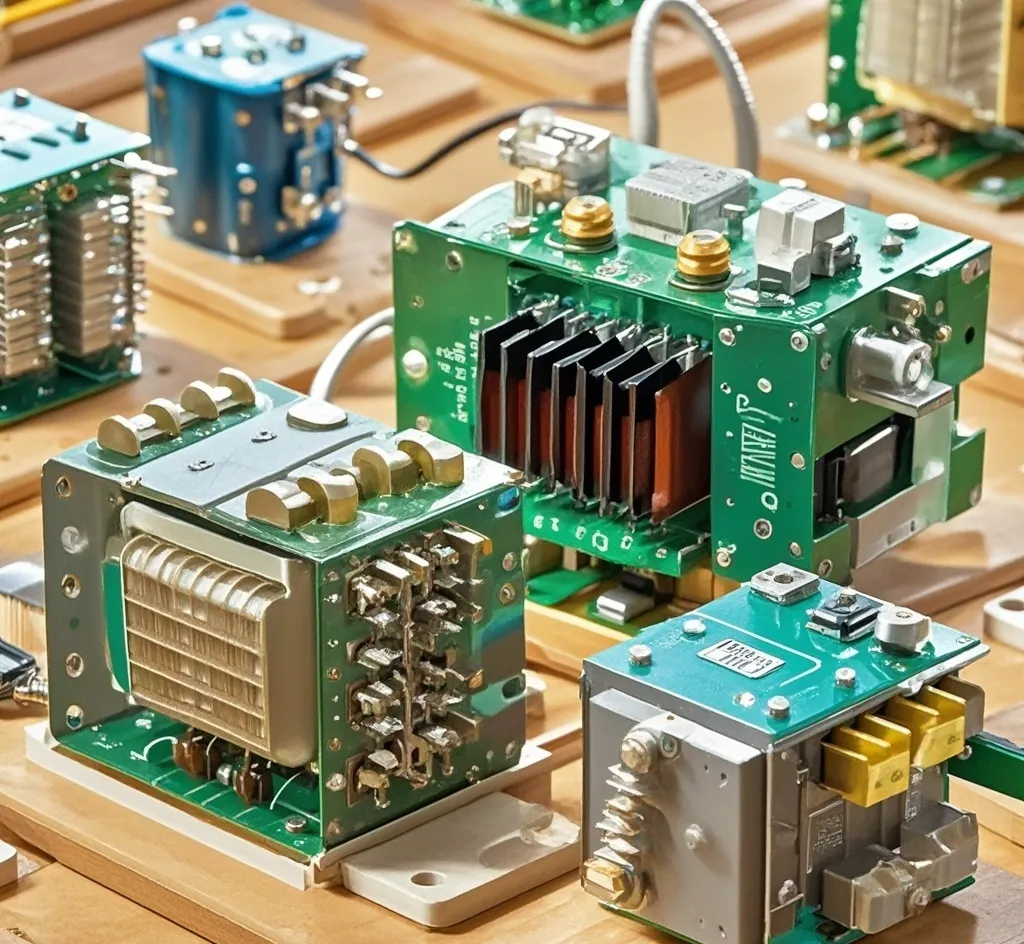
In addition, there are other transformer designs. Existing transformer designs are all based on magnetic technology. The large-scale use of acoustic coupling technology will make future transformers more compact. At present, acoustic coupling technology has been used to a certain extent in some low-power, high-voltage output dc-dc converter designs. Acoustic coupling transformers use the properties of piezoelectric materials to couple electrical energy through a vibrating structure. In an acoustic coupling transformer, a converter excites a resonant mode of a piezoelectric material, which is then intercepted and converted to a secondary voltage by a second secondary converter. In addition, there are some other new transformer technologies, such as using very high operating frequencies to produce effective air coupling and thus eliminate ferrites; combining transformers and other magnetic devices (such as output chokes) into the circuit to reduce the overall waveform factor of the dc-dc design; the development of new core materials can achieve low-loss high-frequency operation, which helps to provide smaller transformers for a given power supply.
Wirewound transformers have gradually failed to meet the application requirements of DC-DC converters. Due to their large size, low efficiency and many other shortcomings, wirewound transformers are being rapidly replaced by emerging products. Embedded and stand-alone planar transformers have their own strengths and can be selected according to specific requirements in practical applications. The tapped secondary (or primary) transformer is an innovation that provides some solutions that are superior to traditional designs. In the future, the development from magnetic transformers to acoustic transformers will lead to more and wider new products, providing more choices for DC-DC converter designers.
Moreover, the synchronous development of transformer design and DC-DC converter technology is the key to meeting the needs of modern electronic devices for efficient, miniaturized and intelligent power supplies. By continuously innovating and optimizing the design of transformers, combined with advanced DC-DC converter technology, more reliable and efficient power solutions can be provided for electronic devices.