
Table Of Contents
DC-DC converters are commonly used in portable and other high-efficiency battery-powered systems. They can achieve efficiencies greater than 95% when stepping up, stepping down, or inverting the supply voltage. The internal resistance of the supply is a major factor limiting efficiency.
DC-DC converters are very commonly used in battery-powered devices or other applications that require power conservation. Similar to linear regulators, DC-DC converters can generate a lower, regulated voltage. However, unlike linear regulators, DC-DC converters can also step up the input voltage or invert it to a negative voltage. As an added benefit, DC-DC converters can provide conversion efficiencies greater than 95% under optimized conditions. However, this efficiency is limited by energy-consuming components, a major factor being the internal resistance of the supply. Today we will talk about the impact of the internal resistance of the supply on the efficiency of DC converters
The internal resistance of the supply has a significant impact on the efficiency of DC-DC converters, as shown below:
Effect on output power
If the power supply has internal resistance, a voltage divider is formed in the loop of the DC-DC converter. As the load current increases, the voltage drop due to the internal resistance of the power supply also increases. This reduces the voltage actually applied to the input of the DC-DC converter. For example, for an ideal 12V power supply, if the internal resistance is 1Ω when the load current is 2A, the voltage drop due to the internal resistance of the power supply will be 2V. At this point, the actual voltage delivered to the input will be 2V. The voltage of the DC-DC converter is only 10V. This limits the output power of the DC-DC converter, since the output power depends on the input voltage and input current, as well as the efficiency of the converter. As the input voltage decreases, the input current must be increased to maintain the same output power, which further increases the losses due to the internal resistance of the power supply.
Affects the stability and reliability of the converter
1. The change in the internal resistance of the power supply can affect the stability of the DC-DC converter. In special cases, if the internal resistance of the power supply is large, it may cause the feedback loop of the DC-DC converter to become unstable, resulting in fluctuations and amplitudes in the output voltage. This is usually because the feedback loop adjusts the working state of the converter according to the change in the output voltage to keep the output signal stable. If the internal resistance of the power supply is large, the change in the output current may cause the input voltage to change significantly, affecting the response of the feedback loop and causing instability.
2. In addition, the internal resistance of the power supply can also affect the reliability of the DC-DC converter. If the internal resistance is large, more heat will be generated inside the power supply under high load. If the heat is not dissipated in time, the temperature of the power supply will rise, which may affect the life and reliability of the power supply and DC-DC converter. At the same time, excessive temperature may cause the performance degradation or damage of electronic components, and even cause safety problems such as fire.
Challenges to thermal management:
The power loss on the internal resistance of the power supply is generally converted into heat energy, which gradually increases the temperature of the power supply and DC-DC converter. Excessive temperature will have an adverse effect on the performance and life of electronic components. For example, the increase in temperature may cause problems such as increased on-resistance of semiconductor components and shortened life of capacitors. In order to ensure the normal operation of the system, additional heat dissipation measures need to be taken, such as adding heat sinks and fans, which not only increases the cost and complexity of the system, but may also take up more space.
In summary, the internal resistance of the power supply has many negative effects on the efficiency of the DC-DC converter, but generally speaking, the advantages outweigh the disadvantages. Therefore, when designing and using DC-DC converters, we should try to reduce the internal resistance of the power supply to improve the efficiency and reliability of the system.
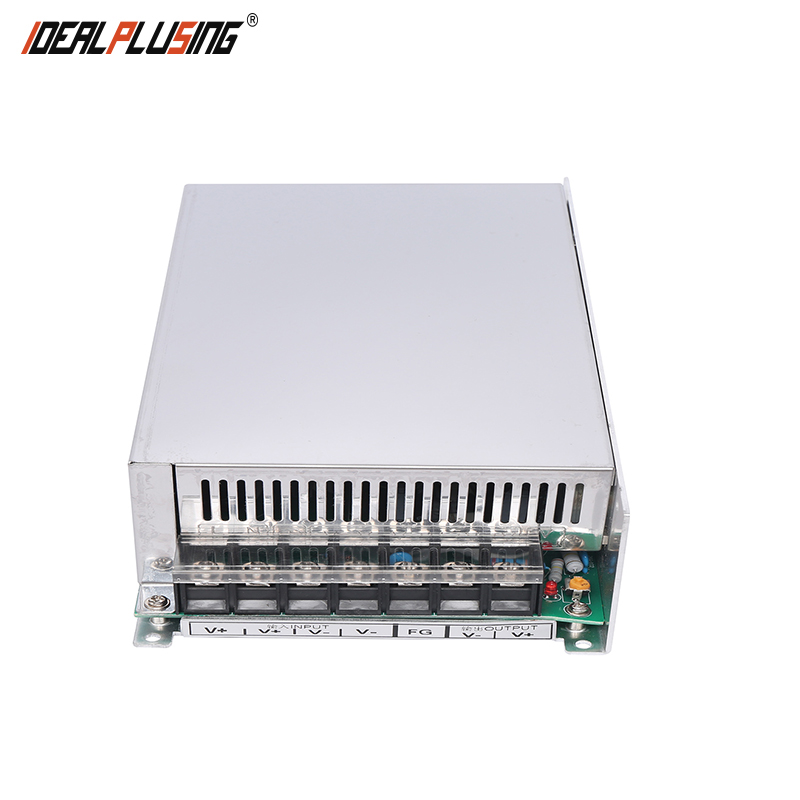
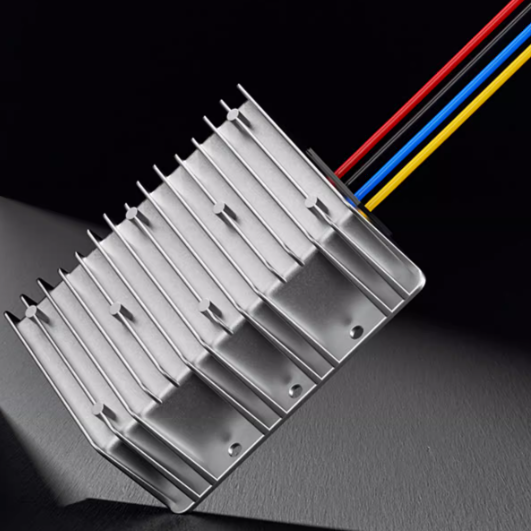
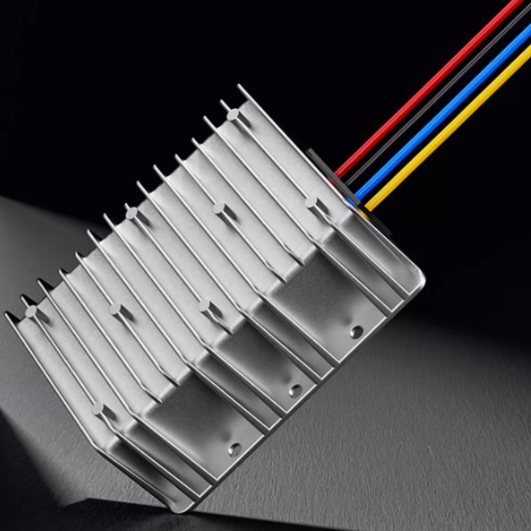
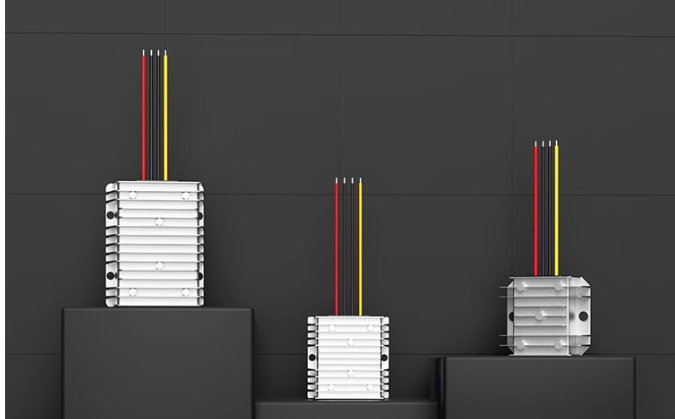
The following pictures will show you more DC converter products