

Table Of Contents
The goal of an AC/DC converter is to convert the input AC signal into a variable DC voltage and then optimize it through a filter to obtain an unregulated DC voltage. AC/DC converters are mainly used in consumer devices, medical devices, industrial and process control systems, measurement equipment, semiconductor manufacturing equipment, and defense applications.
For example, in smart homes, power supplies implement efficient AC/DC conversion hardware to reduce energy losses and achieve significant cost savings. Smart homes and smart offices require mesh control systems with many nodes, actuators, and low-power “always-on” sensors.
In modern electronic devices, improving power efficiency is essential, and AC/DC converters play an important role in this regard. The development and selection of AC/DC converters can become a real challenge. However, the industry offers more and more integrated circuits that integrate innovative functions and shorten development time.
Here are some ways to improve power efficiency using AC/DC converters:
First: Choose an efficient AC-DC converter
1.Pay attention to the conversion efficiency parameters:
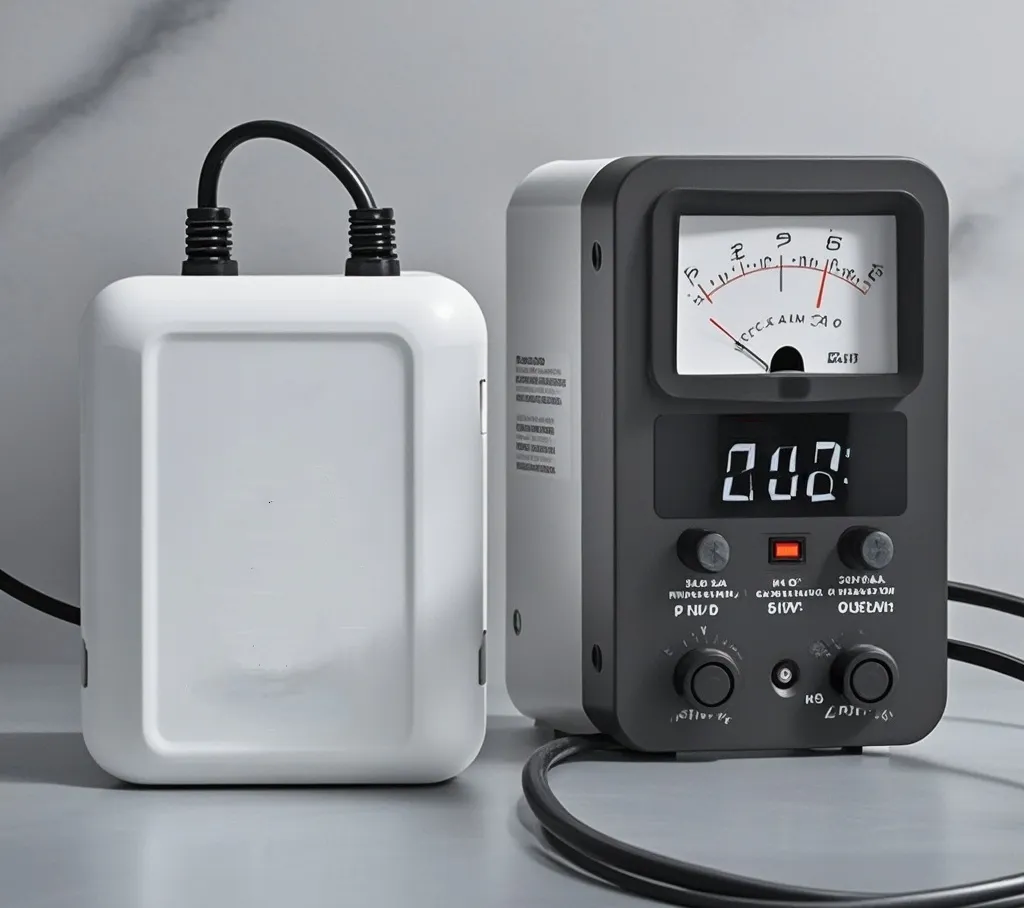
When choosing an AC/DC converter, read its data sheet carefully, focusing on the conversion efficiency parameter. Generally speaking, a high-efficiency converter can convert more input AC power into stable DC output power and reduce energy loss.
For example, some advanced AC/DC converters can achieve conversion efficiencies of over 90%, significantly reducing energy waste compared to less efficient products.
2.Consider power level matching:
Select an AC/DC converter with an appropriate power level based on the power requirements of the actual application. If the power of the converter is too large, the efficiency will be reduced at light load; while if the power is too small, it may cause overload operation, which will also reduce the efficiency or even damage the equipment.
You can choose the best AC/DC converter by accurately calculating the power requirements of your device and allowing some margin.
In addition, the use of advanced control technology

Digital control technology
1. Digitally controlled AC/DC converters can achieve more precise control and optimization, and improve power efficiency. Through a digital signal processor (DSP) or a microcontroller, the input and output parameters can be monitored in real time, and the control strategy can be adjusted to achieve the best conversion efficiency.
Power factor correction (PFC) technology
1. AC/DC converters usually generate harmonic currents, reduce power factor, and increase grid losses. The use of power factor correction technology can improve power factor, reduce harmonic pollution, and improve power efficiency.
| The use of advanced control technology: | |
| Digital control technology | Digitally coFor example, digital control can achieve adaptive control, automatically adjust the operating parameters according to load changes, and improve efficiency under light and heavy loads. |
| Power factor correction (PFC) technology | AC/DC converters usually genCommon PFC technologies include active PFC and passive PFC. Active PFC can achieve higher power factor and better harmonic suppression, but the cost is relatively high; passive PFC is lower in cost, but the performance is slightly inferior. |
Examples of where advanced control technology is used
Through the above methods, AC/DC converters can be effectively used to improve power efficiency, reduce energy consumption, and provide reliable power supply guarantee for the stable operation of electronic equipment. At the same time, with the continuous advancement of technology, future AC/DC converters will be more efficient, intelligent and environmentally friendly.